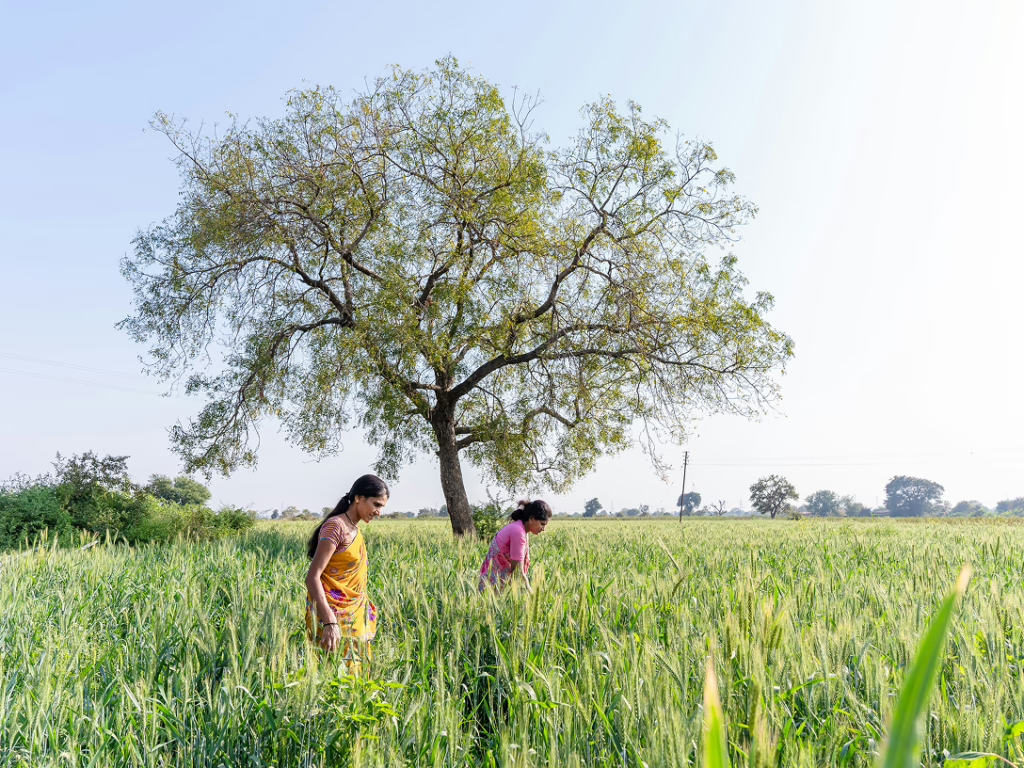
Farmers, fishers, and ranchers keep the world fed and clothed. The fruits of their labor are probably within your eyesight right now — the cup of coffee on your desk, the cotton shirt on your back, the salmon in your freezer. These producers are already advancing solutions to some of the world’s toughest challenges, and their role will grow more important in the years ahead. Food, fiber, and fuel producers are critical to solving long-standing, intractable global challenges.
Over the past 50 years, crop yields and livestock production have increased exponentially. However, these gains have also delivered enormous — and often hidden — costs to people and nature. These costs are largely excluded from assessments and decision-making processes, as are the myriad unseen benefits of competing approaches.
To solve global challenges, society must rethink how it values food, fiber, and fuel production — moving beyond metrics that focus only on how much and how cheaply these agriculture and food products (agrifoods) are produced. Shortsighted metrics have driven misguided conclusions and further entrenched harmful systems while overlooking opportunities to address global needs more sustainably and equitably.
TCA offers a pragmatic alternative. It brings both the positive and negative impacts of agrifood systems into focus, revealing solutions that can maximize benefits for both people and nature. The following graphic explains how TCA provides a fuller picture of costs and benefits across agrifood systems.